Wednesday, June 30, 2021

In defense of 'Iron Man 2': It's not great but it's not so bad

There's a scene I wanna say about a third of the way through Iron Man 2 that is really fantastic. It comes after probably the only thrilling action scene in the movie -- a showdown between Mickey Rourke's Whiplash and Robert Downey Jr's iconic performance in the titular role. Rourke and Downey have a quiet, tense dramatic scene opposite each other in an empty cell.

Rourke's charisma and intensity overcome the somewhat silly Russian accent and there's something electric about seeing these two legendary character actors in the midst of their dramatic comebacks (although Rourke's would be much more shortlived) as Hollywood stars. Unfortunately the dramatic stakes set up in this scene are never fully realized as the overstuffed sequel pushes Rourke to the margins and suffers from to much table setting for future installments.

The film. from the beginning feels like half a victory lap for the original Iron Man film from two years earlier, which is understandable because it was such a game-changer and turned Robert Downey, Jr. into an A-list superstar very unexpectedly in his 40s.

He's in cruise control here as the smug but still likable Tony Stark. There seem to be a couple attempts to add complexity to his character -- they dip a toe into alcholism and suggest his physical health is dramatically deteriorating but there isn't a lot of momentum behind the narrative because it's so patched together.

For instance, why start your superhero movie with a far too long sequence set at a Senate committee hearing. It's fun to see Gary Shandling in this movie, don't get me wrong -- but it goes on way too long.

Then there's the inclusion of Scarlett Johansson -- playing a way too sexualized version of her Black Widow character (they wouldn't figure out how to use her character until far later) and Samuel L. Jackson playing Nick Fury a bit like Jules Winfield in Pulp Fiction.

None of these actors are phoning it in per se. For instance, Sam Rockwell is a lot of fun as a nerdy wannabe Tony Stark (Guy Pearce would do a different take on a similar character in Iron Man 3). And I think Don Cheadle is definitely as upgrade on Terrence Howard as War Machine, although they also didn't figure out how to use him effectively until several movies later.

It's kind of wild watching the movie now when we've seen how much the Marvel universe has grown and how much better these films got at integrating their mythology while not sacrificing a compelling and coherent narrative.

As it stands now Iron Man 2 is a bit of a well-intentioned failure. But I don't hate it as much as many others do. Some of this comes from my affection for Rourke, one of my favorite actors and also, one of the most frustrating. Had he be given more of a fleshed out backstory and had he be given a chance to establish himself as a real key antagonist opposite RDJ, that could have been something.

Instead there are some nice moments here in there is a bit of a mess.

Tuesday, June 29, 2021

Pride: Recommendations for under-represented LGBTQ cinema

Things are getting better when it comes to LGBTQ representation at the movies but barely. Hollywood has long been horribly unkind to the community or simply ignored them entirely. I will be the first to admit that I still have a lot to learn and be exposed to when it comes to LGBTQ culture on film but in honor of Pride Month (and really every month of the year) I wanted to give a shout out to some favorite films of mine with LGBTQ themes and plotlines. 

In some cases the so-called gay subplots are not the entire thrust of the film, which is totally fine, sometimes it emerges as a theme and in other cases sexual identity is integral to a film's appeal

Moonlight - One of those rare movies that I went into rather cold -- was swept away and blown away by it's graceful and loving portrait of a young man coming to grips with his own life and sexual identity -- and I left thinking 'that was a masterpiece.' My impression has not been shaken since, I think it's a seminal work of art that deserved even more accolades than it got.

Paris Is Burning - One of my favorite documentaries of all time and also one of the most influential. It perfectly captures the joy and freedom of ball culture in New York City circa the 1980s while also chronicling the dark shadow of HIV/AIDs and transphobia which looks like a shadow over everything. An important American classic.

The Times of Harvey Milk - The Sean Penn dramatic film is quite good but this documentary is superior because it gives you even more of a sense of the man and the people who loved him. Some incredibly moving stuff here -- it's hard to walk away from this movie without being deeply affected by the tragedy and the inspiration of this man.

Bound - The Wachowskis breakthrough film features a very sexy but also very sincere lesbian love affair at its center. Jennifer Tilly and Gina Gershon have great chemistry together in this twisty thriller. It could have been a cheap exploitation picture but the Wachowskis give their relationship time to breathe and simmer.

Call Me By Your Name - Armie Hammer's unfortunate off-screen exploits aside, this is a gorgeous slow burn of a heartbreaker. Come for Hammer and Timothy Chalemet's roller coaster courtship and stay for Michael Stuhlbarg's heart-stopping monologue during the movie's denouement. One of the most quietly devastating last shots in movie history.

Cruising - Time has been kinder to this film about a cop who goes undercover in the LGBT club scene to catch a serial killer. What's problematic about this film has become fascinating with time and it also legit works as a scary, atmospheric thriller. A film that is really worth of reappraisal.

Booksmart - A thoroughly modern comedy with two note-perfect performances from Beanie Feldstein and Kaitlyn Dever. Dever's storyline, which involves a budding, awkward romance with a female classmate is handled so hilariously and yet delicately that it should serve as a blueprint for all youth comedies going forward.

Other People - A wonderful debut from writer-director Chris Kelly provides the always terrific Jesse Plemons with one of his greatest roles. He plays a gay man caring for his ailing mother (played by a phenomenal Molly Shannon) and must grapple with a father who has shunned him for years. A throwback to the emotionally fulfilling work of James L. Brooks.

Dog Day Afternoon - An ahead of its time LGBT-themed movie (based on a true story no less) doesn't deny the humanity of its characters and takes a larger than life premise (a bank robbery to finance a sex change operation) grounded in human relationships and complexity. It's also one of Pacino's best and most subtle performances.

Mulholland Drive - In the midst of David Lynch's twisted Hollywood noir is a very steamy and sensual romance between Laura Elena Harring and Naomi Watts. At first it's a very traditionally titillating coupling but as the movie's secrets begin to reveal itself as something far more raw and powerful. An unforgettable movie and an iconic relationship.

Monday, June 28, 2021

My favorite remakes (where I've definitely seen the original)

I just recently watched Richard Linklater's solid but also non-essential 2005 remake of the classic 1976 comedy The Bad News Bears. A lot works about the new version, while he's doing nothing new -- Billy Bob Thornton is fun in the lead and Greg Kinnear makes for an especially insidious antagonist. But it doesn't do what the best remakes do, which is improve on the original in new and interesting ways.

Perhaps that was not Linklater's intent, as he no doubt felt nostalgia and affection for the original film and felt it's feel-good underdog story didn't need much updating. So why remake it? It's a bit of a curio in an impressively eclectic filmography. 

There are so many great remakes -- Hollywood wouldn't keep making them if they were always creatively bankrupt. There are several where I can't make an honest comparison because I haven't seen the original (like The Departed and Insomnia) and others where I am pretty much certain they're greater than the inspiration even though I can't honestly say I haven't seen the first version like Heat vs. L.A. Takedown).

Ocean's Eleven - The original is less a movie than a mood -- it's the one movie that features the entire Rat Pack on screen together and in that sense it's historic, but it also feels disjointed as if every superstar sort of breezed through and shot their scenes between sets, which very well may have been the case. The Soderbergh remake is the real classic because it's cohesive, clever and the epitome of a very specific kind of cool. The series made George Clooney and icon and in some ways re-energized the careers of some of its stars.

Invasion of the Body Snatchers - The 1950s original is actually legitimately creepy -- especially it's mad panic of ending -- but the '70s version uses superior special effects and even better cast to weave a truly unforgettable spell. One of the decades great paranoid movies with a brilliant gut punch of an ending.

True Grit - The Coen brothers wisely shifted the focus of their remake of a John Wayne film on its female protagonist (as is the case with the original novel) and came out with a much more emotionally engaging and effective film. It's a rare across the board blockbuster for them in part because it's sneaky sentimental.

Sorcerer - The movie that inspired this 1977 masterpiece is also widely viewed as a masterpiece -- The Wages of Fear. William Friedkin's film ups the stylization a bit, has a big budget and a synthy score, but otherwise they're pretty close. I think Sorcerer just works better because at points it feels like a documentary, in the best way.

A Star Is Born - While the 1954 version might just be the best -- I am still a big fan of the Bradley Cooper-Lady Gaga remake. It felt very alive -- particularly in the musical performances which were raw and moving. I feel like there's been a backlash to film for some reason, and I haven't revisited it recently, but I remember it as a special film.

A Fistful of Dollars - A Westernized version of Akira Kursosawa's cool as a cucumber Yojimbo works only because Clint Eastwood is very bit the charismatic lead that Toshiro Mifune is. It's fun to see how director Sergio Leone tweaks Kurosawa's samurai saga ever so slightly to make to make it work in a new genre.

Let Me In - I know this amounts to blasphemy in many quarters, but I actually like the American version of Let the Right One In better -- eek-- don't hate me. Director Matt Reeves made a faster paced and more viscerally satisfying version of a very bittersweet horror film.

Scarface - A vulgar, grotesque and gory update on Howard Hawks' 1932 genre breakthrough -- it's definitely not for everyone's tastes but I love it to death. Al Pacino, gloriously chewing scenery, gets to go places that the great Paul Muni just could go and director Brian De Palma does a deliriously good job of capturing the decade and mayhem of drug culture.

Cape Fear - I've already written about this but the 1991 Scorsese film benefits from a lack of censorship and a decidedly more complex take on the material. That doesn't mean the original 1962 film isn't a lot of noir fun, it is, but Scorsese's film makes a more lasting impression for a reason.

Saturday, June 26, 2021

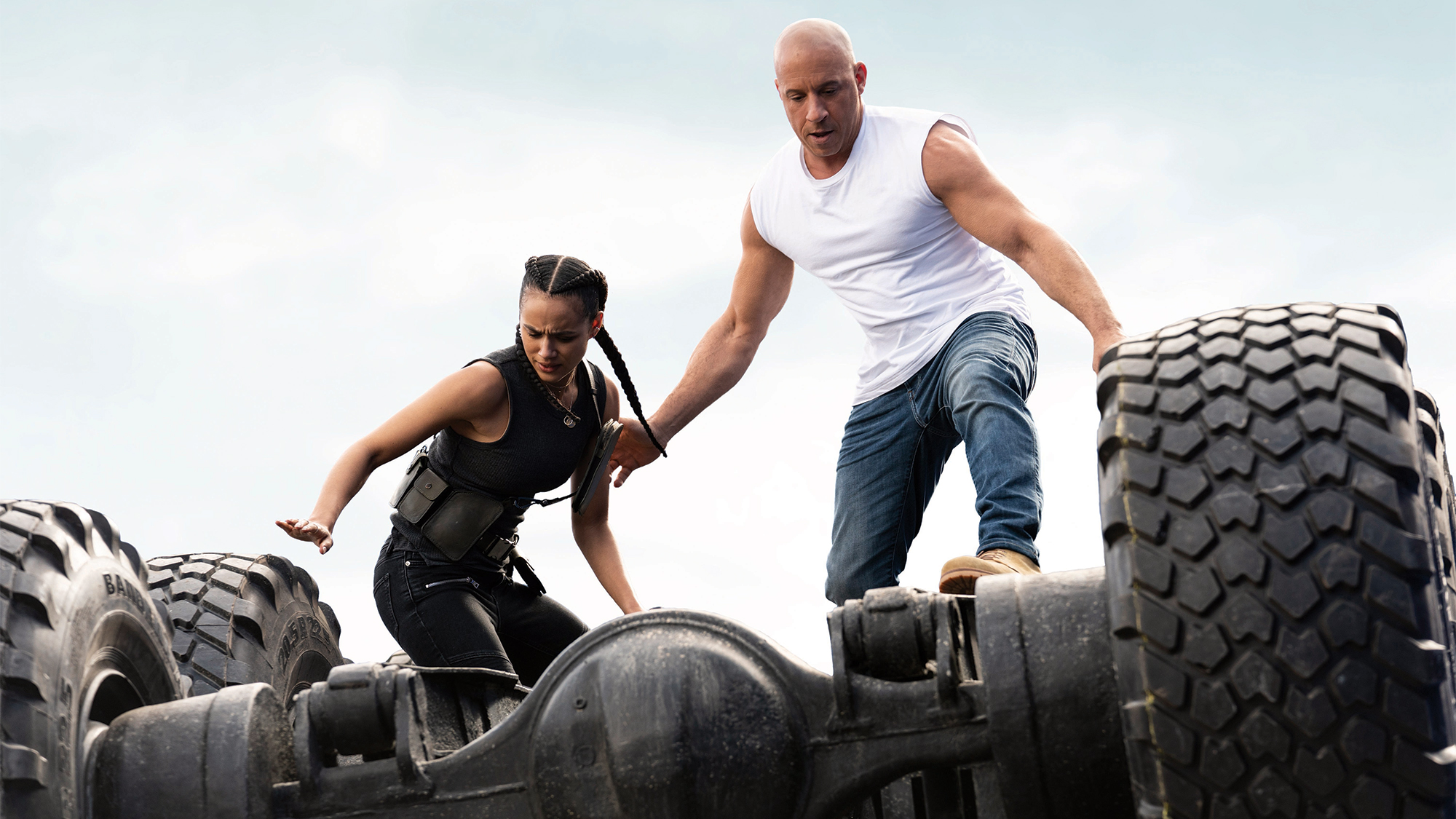
'F9' is so dumb it's fun like all other 'Furious' films

Two things can be true. A movie can be too dumb to love but also too fun to hate. That's how I feel about most of the Fast & Furious movies. Even the 'good' ones are pretty irredeemably ridiculous. This new one had the audience I saw it with cracking up, and it definitely wasn't because the movie was being intentionally funny.

While The Rock and Jason Statham seem to be at least somewhat in on the joke of what these movies are -- which is why Hobbs & Shaw was so much fun -- Vin Diesel definitely isn't. He long ago eschewed much of an ability to even emote like a normal human being and the franchise is constructed to seemingly make him seem like a God-like indestructible force of nature.

And yet, with all its eye-roll inducing moments -- F9: The Fast Saga -- is pretty fun from start to finish.

For every leaden dramatic scene or absurd exchange of dialogue (Charlize Theron, who inexplicably is being held captive in some kind of cube where her make-up and clothes are impeccable delivers a speech packed with Star Wars references which is laugh out of loud hilariously bad) there's an inventive, fast-paced really well-rendered action scene that will make you guffaw with joy.

A lot of the credit goes to Justin Lin, who has directed several of the stronger entries of the series and mostly keeps things moving fast enough that you don't have to dwell with the insanity of what's happening on screen.

Even more than the previous entries, this one feels the most like a Marvel movie. They go into space. They are chasing some glowing thing-a-ma-jig that apparently can end the world as we know it. It's a victory lap movie and a getting the gang back together movie. We get flashbacks of a 'young' Dom (so how old are we to accept the fiftysomething Diesel is in this film?) and an elaborate backstory to his relationship with his brother played by a miscast John Cena attempting to out-wooden Diesel as an actor.

I kept being begrudgingly impressed by the sheer hubris of this franchise -- it dares you to laugh at its absurdity while kicking its stupidity up another notch. It's not just silliness of its coincidences of the gargantuan stakes it sets up and tries to deliver on, it's audacity to keep pushing the envelope without any real character development or realism whatsoever.

At this point Diesel's cinematic family are essentially indestructible superheroes -- there's even a running beat where Tyrese claims that team is incapable of being hurt in action that kind of comes to nothing, sort of like the movie.

Nothing changes. Everyone remains a 'family,' bad guys suddenly turn and become part of a team and there will be a sequel. Will this 10th one be the last one? Not if this one makes as much money and its predecessors. Clearly the fans are willing to go anywhere this franchise goes. 

And I guess I will too. I can't wholeheartedly endorse these movies -- they're like a sugar rush that leaves you with a stomach ache afterwards. They blend together for me and with a few exceptions they become instantly forgettable.

I suppose this one is destined to be remembered as the 'magnets' one -- it uses them to great effect repeatedly -- but it also seems to have established a new benchmark for what this series can creatively do, especially since character development and plot has never been this series' strong suit.

Monday, June 21, 2021

'The Right' Stuff' and the best book-to-film adaptations

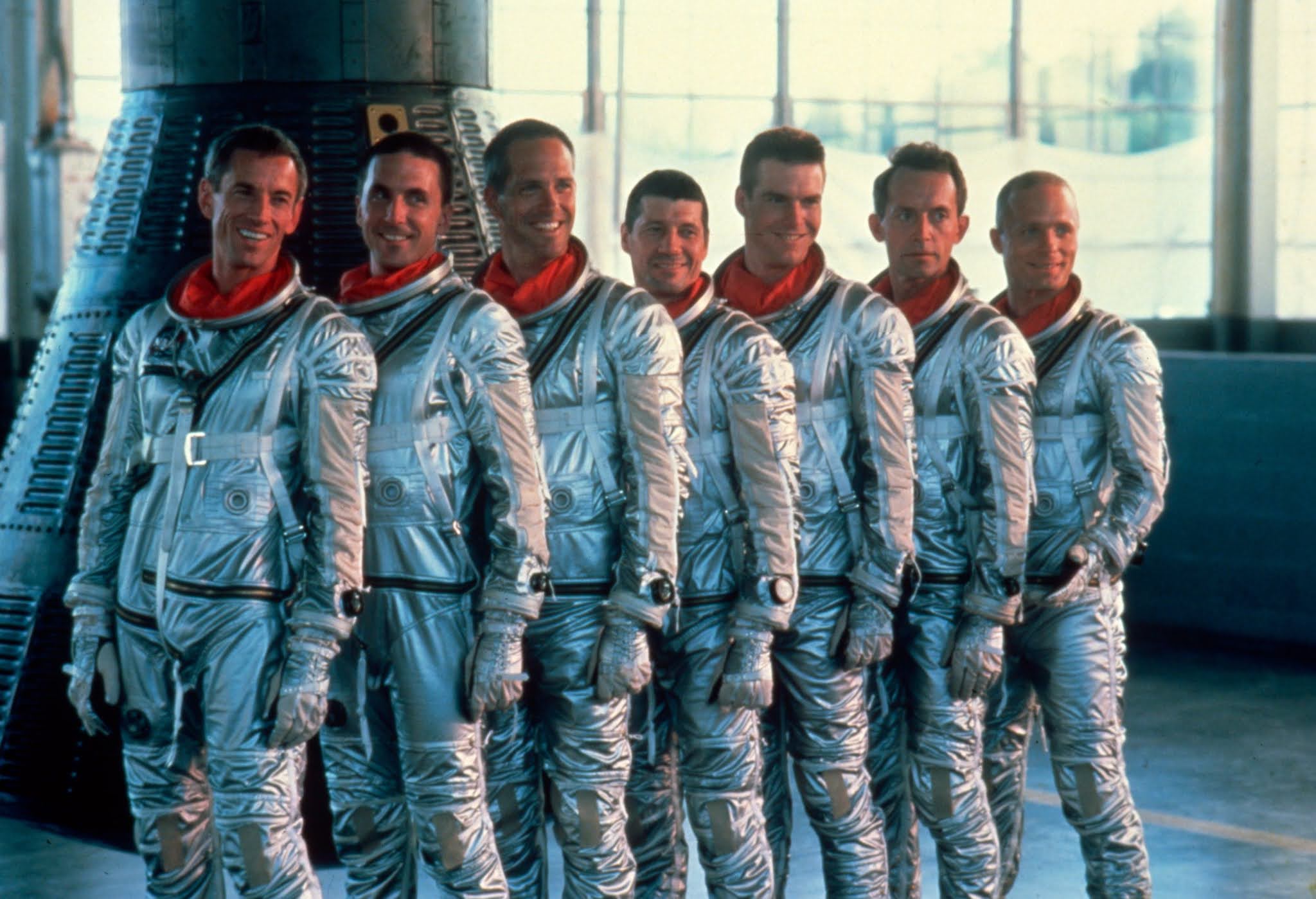
I recently resisted 1983's ambitious and underrated epic about the early NASA program -- The Right Stuff -- after having read the classic new journalism book by Tom Wolfe on which it is based. It's a wonderful, ambitious film -- that was not fully appreciated by audiences (although it was widely embraced by critics) upon its first release, but today is understood to be a great cinematic experience.

Having read the book -- I can also say it's a pretty much note perfect expression of what's on the page. The film brilliantly portrays the competitiveness and camaraderie of the astronauts and their wives, the media circus around them and the macho mystique of test pilot Chuck Yeager, whose aeronautic exploits were unjustly overshadowed by the ballyhooed Mercury 7 astronauts.

The book is riveting but also has a terrific sense of humor and specificity of detail, which director Philip Kaufman captures perfectly. Ultimately, the book and the movie have their cake and eat it too, its both an awe inspiring look at the heroics of these early astronauts and also a send-up of the absurd level of hero worship they engendered.

That got me thinking, what are some of the other great cinematic book adaptations -- they are really a countless amount. For instance, most of Kubrick's great films drew inspiration from a literary text. There are several I can't judge because I'm embarrassed to admit, I haven't head the book, but here are a few that come to mind (and which I've read -- for instance I've never read The Silence of the Lambs):

Lolita (1962) - Speaking of Kubrick, I know he was never happy with how neutered his version of the controversial best-seller by Vladimir Nabokov (which explores a much older man's sexual obsession with a prepubescent girl) but I still think the movie works by being suggestive in a sly sophisticated manner when it couldn't be explicit. And the movie, just like the book, finds the humor in its inherently bleak and disturbing narrative.

The Godfather (1972) - The Mario Puzo book really serves as the inspiration for both the original Francis Ford Coppola film and its sequel. Coppola brilliantly trimmed all the fat and the trash (including a deeply weird subplot about a mobster's wife getting reconstructive surgery on her vagina) and focused on what the novel does best, which is focus on the rise and fall (and rise again)m,, of the Corleone crime family.

No Country for Old Men (2007) - The Coen brothers wisely left most of author Cormac McCarthy's existential thriller in tact. They take creative license where they can -- for instance the book doesn't offer much of a physical description of its chilling antagonist (played in the film memorably by Javier Bardem) so the bowl cut was apparently their invention. But the movie gets the film's brutal and elegiac tone just right.

Jaws (1975) - The book Jaws, while entertaining, has a lot more domestic drama in it (Hooper, the character, played by Richard Dreyfuss, has an affair with Brody's wife, for instance) and director Steven Spielberg wisely shifts more of the attention on the adventures at sea that dominate the book's final stretch and beefs up the character of Quint, who has a much smaller role in the book. The book's author, Peter Benchley, had his initial script for the movie tossed out but even he had to admit the Carl Gottlieb adaptation was superior. 

One Flew Over the Cuckoo's Nest (1975) - Milos Forman's version of the classic Ken Kesey book about a non conformist who shakes things up at a mental institution is decidedly more optimistic -- at least in its finale -- than the book, which ends on a very sour note. Some may quibble with this but I think the movie still is powerful and profound, bringing its claustrophobic setting to life as well as making McMurphy (Jack Nicholson) and Nurse Ratched (Louise Fletcher) become the iconic figures they were on the page.

American Psycho (2000) - A classic example of a book that should have been impossible to adapt -- especially with it's infamous detailed descriptions of grotesque murders -- but somehow works because of the film adaptation's willingness to use restraint, humor and a go-for-broke lead performance from Christian Bale to help the movie from going too far off the rails. Like any great adaptation it keeps the book's essence and perspective in tact but makes it a little more accessible.

The Shining (1980) - It's been well-established that Stephen King hates this adaptation of his book, although other than The Shawshank Redemption it arguably remains the most durably popular. If you've read the book it's clear King had sympathy for the Jack Torrance character whereas Stanley Kubrick did not. Both approaches are valid, I just prefer Kubrick's darker, more psychologically complex one. But the material is great and gives any audience a lot to feast on (and be frightened of).

The Girl with the Dragon Tattoo (2011) - The first of the late Stieg Larsson's best-seller's had a lot of incredible, page-turning material in it, but also a lot of extraneous fluff that distracted from the great mystery at its core. Director David Fincher brilliantly trims the fat and keeps this dense narrative moving from point A to point B, without sacrificing the detailed nature of the text.

The Color Purple (1985) - Some critics then and now have hated on this Spielberg film for tamping down some of the more explicit sexuality of the book, and that's a totally fair critique, but where he does succeed is tap into the incredible emotions of the story and provide an opportunity for the entire cast to shine in an intense but ultimately beautiful story.

Gone Girl (2014) - Fincher strikes again. He takes a perfectly entertaining page turner -- a gender-themed thriller by Gillian Flynn -- and made it something more sublime. Ben Affleck is perfectly cast as a jerk and Rosamund Pike is a revelation in the lead. I read the book the shortly before the movie and liked it fine, and then Fincher's film trumped it in every way.


Monday, June 14, 2021

RIP Ned Beatty, one of best character actors of the '70s

We lost another great this week -- veteran character actor Ned Beatty. He was so under-appreciated -- appearing in many of the best movies of the 1970s -- but also doing great work in his later years too, including on Homicide: Life in the Street, which may have been where I first really came to appreciate him.

Even though, like most people, I probably saw him for the first time as the lovably bumbling villain Otis is the first two Superman films starring Christopher Reeve. 

He was definitely not a traditional leading man type but he also wisely avoided getting typecast -- even after playing an infamously vulnerable scene in his debut film Deliverance. I can't think of a role that could have been more of a career killer for a young actor getting their start, but instead he parlayed that into a prolific career. Here are my five favorite roles of his...

Deliverance - This brilliant and disturbing 1972 thriller about four middle class men who's humanity gets tested when they run afoul of some brutal mountain men during a rafting trip. Beatty probably has the trickiest part -- a bit of a novice who at first clashes with Burt Reynolds' alpha male but later becomes his unlikely ally. Will always be infamous for its "squeal like a pig" rape scene which Beatty played with dignity and restraint.

Nashville - Perhaps my favorite Beatty performance and one worthy of Oscar love had it not been overshadowed by the many other scene-stealing roles in this genius Robert Altman mosaic. He plays a glad-handing aspiring politico who tragically, pathetically cut off from his children because they are hearing impaired, and unlike his wife (played beautifully by Lily Tomlin), he hasn't bothered to learn sign language. The scene of him, alone in the kitchen while he listens to his family joyfully interact in the other room, is one of the movie's most quietly devastating.

Network - Beatty had a very busy, prolific 1976, appearing in hits like All the President's Men and Silver Streak. But his biggest role -- not in length but in terms of impact -- was in Network. He scored his first and only Oscar nod playing an imposing, God-like television network president who delivers a gloriously over top speech exalting capitalism which takes the movie's madcap plot in a whole new direction. One of the best short but sweet turns.

Superman - His silly, cartoonish work in this movie sets the bright, lighthearted tone of this influential superhero film from the very beginning. He's the perfect foil for Gene Hackman's vain and snooty take on Lex Luthor and while he's a bit one note, he plays that note to perfection. I can't think of these movies and not think of him sputtering "Mr. Luthor!" and not smile.

Toy Story 3 - Beatty made a surprising and unforgettable contribution to what may still be my favorite entry in this beloved Pixar franchise. He played the seemingly genteel and avuncular Lotso (short for 'Lots o' Fun Bear') who turns out to be a pretty nefarious villain who kickstarts perhaps the darkest turn these movies ever took. A sly and memorable turn that will ensure his legacy for generations to come.

Sunday, June 13, 2021

'In the Heights' is almost unbearably cutesy, but joyous

If you loved Hamilton you'll probably at least really enjoy In the Heights. If you saw Hamilton and thought it was overhyped or a little exhausting (I know those people are out there) you should definitely steer clear.

At 2 1/2 hours, In the Heights feels very long indeed and the sheer breath of its songs and musical numbers can be a little numbing at times, but it is also frequently deliriously fun and infectious, a bit of a candy colored fairy tale that is unapologetically old fashioned and determined to make audiences feel good.

In a way, it's the ideal movie to get people back into theaters and I regret watching it streaming on HBO Max as I think it diminished its appeal and impact somewhat. The movie looks amazing and has the same ambitious sprawl of the director Jon M. Chu's last big budget effort, the hit film Crazy Rich Asians.

While that movie was a rom com it could have just as easily been a musical, just like this film could have just as easily been a rom com. It's plot is very low stakes -- the hero must determine whether to realize a lifelong dream about relocating from Washington Heights to his native Dominican Republic, but is torn because of all the family both real and informal he's developed here in the states.

That is pretty much it. The movie has a number of other little side plots and some pointed and poignant nods to modern-day political issues like immigration -- but for the most part it's a throwback, slice of life extravaganza, which is just... fine.

I am just a little confusing by the breathless raves this film has received. The musical numbers are fantastic and gloriously staged but the songs themselves didn't really have the same earworm quality that Hamilton's did -- at least for me.

It probably suffers from one character too many -- and while it's refreshing to see a cast of mostly unknowns (veteran actor Jimmy Smits is one of the few exceptions) I didn't feel as emotionally invested in the movie as I'd wanted to be or as much as filmmakers wanted me to be.

And with all that being said, the movie is a triumph for representation, it feels authentic and it makes great use of real NYC locations which give it a vibrancy and life all its own. And I would be perfectly happy for it to be the kind of movie that galvanizes people to return to see movies in theaters again.

It's a very sweet movie -- almost unbearably cute at times (I literally thought it might end with a wink, but it just barely didn't) and it isn't exactly bursting with high stakes and tension. I think it's telling that it was Broadway icon Lin Manuel Miranda's first major breakthrough. It feels like a lot of the musical ideas he would later fully realize in Hamilton appear to be germinated here in slightly less complex forms.

It's a little overstuffed and overlong, and I called the ending about n hour early. But it's a hard movie to hate on, especially when it has such great intentions. Basically, if you want a frothy, feel good time it'll satisfy but I am looking for more substance from my would-be Best Picture nominees.