Wednesday, April 30, 2014

RIP Bob Hoskins: One of the all-time great British actors is gone

Bob Hoskins in The Long Good Friday
I was shocked to learn that the combustible Cockney actor Bob Hoskins had died at the age of 71.

I had literally just watched his iconic star-making role in the 1980 gangster classic The Long Good Friday last week and had marveled at how ferocious and badass his lead performance was.

Of course most American audiences became aware of Hoskins when he took on an unlikely leading role opposite a cartoon in the 1988 blockbuster Who Framed Roger Rabbit.

As I've written before, this movie both delighted me and terrified me as a child. The movie works, for the most part, because Hoskins is entirely credible as a hard-bitten Los Angeles gumshoe and he plays it totally straight opposite a bevy of animated stars.

I remember being shocked to learn after the fact that Hoskins was British but I came to appreciate his chameleon ability in many character roles.

He shined in a lot of small parts. Among my favorites were his droll Smee opposite Dustin Hoffman in Steven Spielberg's underrated Hook (1991) and his insidious take on the infamous J. Edgar Hoover in Oliver Stone's terrific epic Nixon (1995).

Still, for me his best role -- and it appears many critics agree with me -- is his first major one, The Long Good Friday. His performance as Harold Shand -- a pompous, but also, rough around the edges, mob boss -- is deserving of legendary status. He tears through the screen, with a very sexy Helen Mirren by his side, as a doomed but dazzling guy from the streets who aspires for grandeur.

Al Pacino's Scarface owes a little bit to the Shand character, but Hoskins also has a style and lingo all his own. Hoskins was fantastic at playing combustible rage and barely contained emotion. Yet, for me, he was never over-the-top and he felt entirely authentic.

As tragic as his passing is, I'm excited at the prospect of a whole new generation of film buffs rediscovering this great actor's work. Start with The Long Good Friday, if you can get past the thick accents (subtitles are your friend), you won't regret it.

Thursday, April 24, 2014

Why I miss Goldie Hawn at the movies

Goldie Hawn in Private Benjamin
Last night my girlfriend and I indulged in a double feature of some classic Goldie Hawn movies: the 1978 comedy Foul Play (opposite Chevy Chase) and her Oscar nominated lead role in Private Benjamin (1980).

I've always enjoyed Hawn's work -- even if it was only sporadically great -- because she had such a unique and incredibly appealing persona and it's a shame she has pretty much retired from acting.

Of course, sadly, plastic surgery has both made her a subject of ridicule and quite possibly has ruined her career. If you caught a glimpse of her at the Academy Awards earlier this year you probably know what I mean.

It doesn't help that since the 90s she's starred in a string of expensive flops, including the infamous disaster Town and Country, which also cut short Warren Beatty's legendary film career.

Still her work in the 70s and 80s (and in the occasional 90s hit like Death Becomes Her) is a delight and sneaky smart.

Goldie Hawn and Chevy Chase in Foul Play
Hawn understood what people like Anna Faris and Jessica Simpson don't -- that you can play someone who appears to be ditzy on the surface with real depth and brains. Her characters were plucky and determined and ultimately empowered. In Private Benjamin in particular, she really taps into some interesting themes about the relationships between women and the men in their lives.

In Foul Play (and later in Seems Like Old Times), Hawn had great romantic chemistry with one of my all-time favorite comedy idols, Chevy Chase.

The movie is a fast-paced and funny homage to classic Hitchcock with a dash of screwball comedy. Chase never quite generated these kinds of sparks with a female co-star again. They seemed to really be falling for each other.

Hawn's work was also strong in the smart politically-minded 1975 satire Shampoo, in which she plays one of the many women who are involved with Warren Beatty's Lothario hairdresser. Although her role in that underrated hit is not as flashy as Julie Christie's or Lee Grant's, she holds her own as a woman fed up with being under-appreciated.

Although some of her roles may now seem quaint or like precursors to the career of say, Reese Witherspoon, I don't think that gives Goldie Hawn quite the credit she deserves. She carved out a totally credible and distinct comedic persona (and got top billing) at a time when the genre was completely dominated by men and their sensibilities.

And for all their bubbly infectiousness, Hawn's character's weren't wimps or pushovers. They were take-charge women who find happiness on their own terms. For instance, in Seems Like Old Times, she is a fiercely progressive attorney and in Wildcats she's a football coach. That's some range!

The ending of Private Benjamin, which is ostensibly a mainstream fish-out-of-water comedy, has a real poignancy to it. I won't spoil it, but I think that the movie has more on its mind that some army barracks hi-jinks.

Even if her face is currently distorted almost beyond recognition, I miss Goldie Hawn's persona at the movies and I wish there was some way she could make a comeback.

Well, we'll always have Housesitter.

Wednesday, April 23, 2014

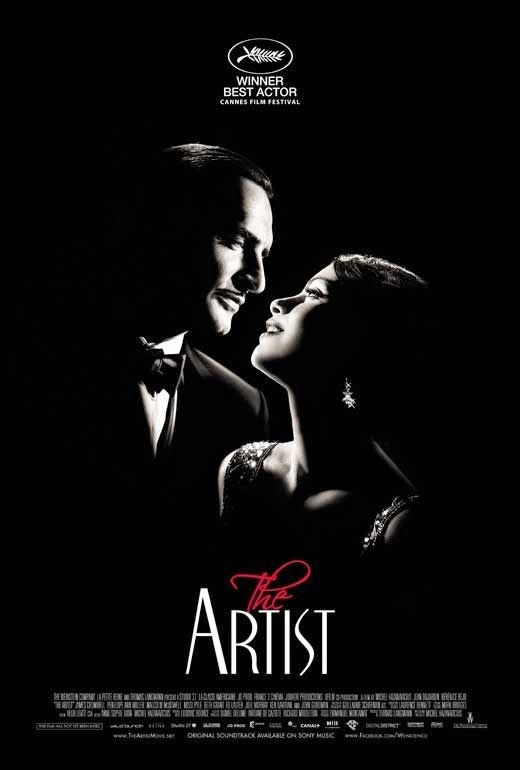
'The Artist' and the other most overrated best picture winners

Don't get me wrong, The Artist is a totally likable movie and I didn't hate watching it, but it's always seemed absurd to me that it took home so many major Academy Awards.

Was it getting rewarded simply for pulling off a silent film in 2011? An impressive feat -- I guess. But the movie was so wholly unoriginal in terms of its story and the actors didn't bowl me over with any depth or passion. I'm still furious that Jean Dujardin robbed more deserving performers like George Clooney and Brad Pitt for best actor.

Obviously we are a long way from Oscar season, but revisiting this film just reminded me how frustrating the Academy Awards are, especially the best picture race.

True cinema fans aren't supposed to give a damn about them but they're sort of like the championship banners of the industry. Once you win, it can never be changed or erased, and it's like an official label declaring a film the best of the year.

Of course, in my estimation, "the right movie" rarely wins. There are exceptions to this rule, like this year when 12 Years a Slave triumphed or back in 2007 when No Country For Old Men emerged triumphant against some stronger, edgier material than usual. Still, even in the last 10 years or so I've been often disappointed in the results.

Some years like in 2005 and 2008, my favorite films of that year weren't even nominated. I thought A History of Violence was the best film of 2005 and it was ignored. And I thought The Dark Knight and The Wrestler deserved a spot in 2008's five nominees far more than a mediocre film like The Reader or even the movie that won, Slumdog Millionaire.

These debates have gone on for years. To this day we're reminded that classics like Citizen Kane got snubbed and historically the academy has always skewed older and more conservative, so more often than not the victories reflect that.

Still in just the last few years some best picture winners have really rubbed me the wrong way. I think The Artist was and is a minor film that was an exercise in technique and little else. Despite some nifty dancing at the end I was not really effected by it at all. I liked it -- it was well made -- but it wasn't worthy of winning.
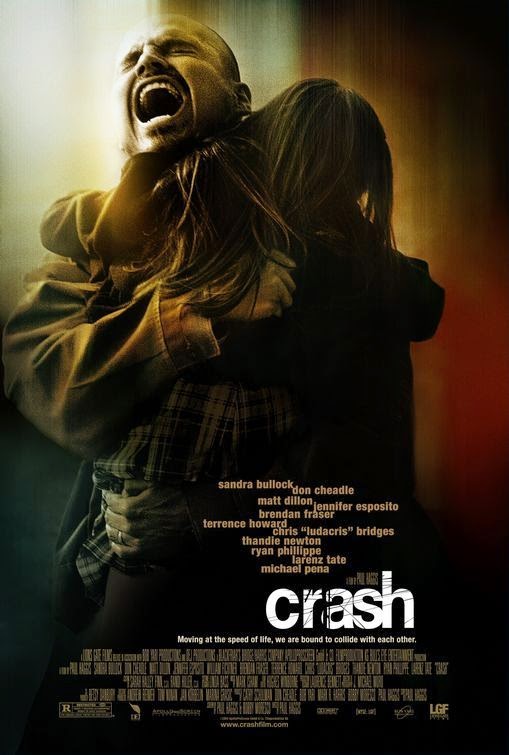
The 2005 victory of Crash was for me, and clearly a lot of other people, far more problematic.It wasn't that Brokeback Mountain or any of the other contenders were all that great (although I did love Capote), it was that Crash was that bad.

Now, I've had friends who I adore and respect passionately try to defend Crash and, of course, everyone is entitled to their own opinion. I only have seen it once, in a hotel room during a slightly harried state of mind (my brother was getting married in a matter of hours and I was expected to deliver a toast at the reception). But I do recall it is the only movie I seriously thought about walking out on in my life. Sidebar: I had to take a breather from Antichrist, but I did get through it.

It was a limousine liberal's wet dream, overwritten, simplistic and narratively beyond absurd. A character announces they hate Asian people and then moments later they are thrown into a situation where they are confronted with the humanity of Asian people. There, I just wrote a scene that could have made the final cut of Crash. It was universally viewed as the weakest nominee of the five in 2005, so how did it win?

I am not a massive Brokeback Mountain fan, but it was obviously widely seen as the film to beat that year and something of a watershed in terms of its depiction of a gay male relationship. There were definitely reports of homophobia at the time preventing some academy members from embracing that film which is bizarre since they'd been rewarding actors for playing gay characters since the 1980s.

Still, it's stories like that which make 12 Years a Slave's victory all that more remarkable. Even though it was clearly the best film nominated, it wasn't the safest and Hollywood could have easily have embraced more mainstream fare.

This is what happened in the case of The King's Speech, another nice movie for nice people. Again, not a bad film and a very well-acted one, but for me it was so predictable that it had almost no staying power. Did anyone, and I mean anyone, watch this movie thinking that Colin Firth's character wouldn't overcome his stutter? And I also admit to having a hard time (especially with the economy in the state it was at the time) feeling sympathy for a monarch.

Meanwhile, David Fincher's The Social Network, which to me was a triumph of editing, writing and acting, somehow didn't take home the big prize. And yet 20 years from now which film will have had more influence and will still remain relevant? I think the Fincher film.

I have to remind myself every year that like everything else, the Academy Awards are political and while some voters may be truly backing films they're passionate about for best pictures, there others with different kinds of axes to grind.

Tuesday, April 22, 2014

'The Grey' is better than just a wolf-fighting B-movie

The Grey is derisively referred to as the "movie where Liam Neeson fights wolves" -- but I think it's much better than that,

After a second viewing, I've come to see the film as incredibly underrated and probably the best star-vehicle of Neeson's remarkable late career run as an action star.

I admit to having only seen this and the original Taken, and I prefer this film over that entertaining, but preposterously silly lark. Neeson is such a dynamic star presence because he just oozes sincerity (which is probably why he was uniquely equipped to play Oskar Schindler) and he is also totally credible as an action hero (despite his advanced age, he appears imposing).

The Grey is undeniably a B-movie, but it is a beautifully crafted one that was pretty misunderstood when it first hit theaters, even by me.

Neeson plays a rugged (and deeply sad) oil field worker who takes charge of a band of surly men after they survive a harrowing plane crash in an unforgiving Arctic landscape. I have no idea where they shot this film, but they do a remarkable job of making you feel the elements and the claustrophobic relentlessness of the barrage of snow.

Liam Neeson
As anyone who's seen the trailer is aware, the men are subjected to a series of brutal wolf attacks. These moments are effectively scary but they're also the least interesting thing about the movie. Essentially they provide a terrific existential threat that lends a certain doom to the proceedings.

I also think they are responsible for the mixed reception that the film got and continues to have. It opened well and did decent business, but it wasn't the movie a lot of audiences thought it would be.

For those seeking non-stop action (and constant wolf attacks) the movie was too slow and contemplative. And on the other end of the spectrum films snobs just couldn't get past the image of Neeson presumably putting up his dukes to single-handedly punch out a pack of wild animals.

The director of film, Joe Carnahan, will never be accused of subtlety -- this is the man behind Smokin' Aces and The A-Team after all. But He has a kind of ambitiousness that I find enjoyable.

He wants The Grey to be about something and also exciting in an old fashioned blood-and-guts kind of way. This movie shares some DNA with First Blood and other man-against-nature action classics of the 80s.

In the center of it all is Neeson, who rivals Denzel Washington and Tom Hanks among the ranks of our most trustworthy movie stars. Watching this movie, I genuinely thought to myself I would want this guy on my side if I was ever stranded in the wilderness. We just accept as an audience that his character has a thorough knowledge of the rituals and mentality of wolves because he delivers his dialogue with such knowing authenticity that it seems totally plausible.

Is The Grey a classic? Probably not, but it's certainly worthy of a revisit and reappraisal. I think Neeson has tapped into an audience desire to see more of a thinking man's action hero -- a role Harrison Ford played beautifully until his career took a bit of a downturn in the early 2000s. He invests every role, no matter how silly, will real feeling and while he can't always elevate the material, I think in this case he does.

Sunday, April 20, 2014

1974 Flashback: My top 10 from 40 years ago

1974 was an incredibly fascinating year in America and at the movies. It was the year Richard Nixon finally resigned from office after the prolonged Watergate debacle and an air of cynicism and paranoia had seeped into even the most mainstream Hollywood productions.

The 1970s are my favorite film era for a myriad of reasons -- among them the dark and often subversive content, which reflected the political climate of the times.

It was also a period when my favorite generation of A-list actors (Nicholson, Hoffman, Beatty, Redford, Pacino, Hackman and De Niro) did some of their best, most iconic work.

I am continuing my top 10 series which started with 2004 and then 1994 and 1984. I don't know if I'm capable of coming up with a top 10 list from 50 years ago, so this may be the last one of these 10-year intervals.

10) The Texas Chainsaw Massacre - From the opening shots, the original Texas Chainsaw Massacre creates an unsettling and uncomfortably realistic feel. An unrelenting horror classic that inspired many subpar imitators, there is also a very odd and eccentric strain of humor throughout this grisly enterprise and despite its title, the scares are genuine not gore-induced.

9) Young Frankenstein - One of two home runs from Mel Brooks in 1974. He assembled a comedy dream team, including Gene Wilder, Peter Boyle, Marty Feldman and Madeleine Kahn, to pay homage to the great horror classics of the 1930s. Very stylish looking and unabashedly silly -- this is a spoof that has a lot of genuine affection for its source material, which is part of why it succeeds.

8) Bring Me the Head of Alfredo Garcia - I didn't love this one at first, but I've come to realize that Sam Peckinpah films are something of an acquired taste. A fascinating and deeply strange melodrama about a hard-drinking loser (played by the brilliant Warren Oates) who takes on a brutal mission for some chump change and ends up going to hell and back. Not for the squeamish -- but if you like your character studies dark (and I do) it's a keeper.

7) Alice Doesn't Live Here Anymore - After his Mean Streets breakthrough, Scorsese decided to stretch and show he could make a film about women. Ellen Burstyn won the Academy Award for the titular role in this bittersweet comedy-drama about a recently widowed mom who has to fend for herself for the first time. Scorsese infuses the material with some of his signature, flashy camera moves but it is at its core a simple story with a lot of heart.

6) Death Wish - A morally reprehensible revenge fantasy -- but also an incredibly potent and entertaining one. Charles Bronson is one of my all-time favorite action stars -- and this is his most iconic role. He is completely believable as a soft-spoken but stern businessman who becomes a vigilante in the wake of a brutal attack on his wife and daughter. The politics of the film will always be hotly debated but the creepy last shot suggests director Michael Winner was at least a little ambivalent about his protagonist.

The creepy last shot in question from Death Wish
5) The Taking of Pelham 1-2-3 - Walter Matthau as action hero? It's not as ridiculous as it sounds in this very New York style thriller set in the subways. The remake can't hold a candle to this gritty and clever caper film. Not only does it have genuine thrills but the movie boasts a wonderfully comic sarcasm that pays off time and time again. Also, Robert Shaw cements his status as one of the best bad guys of the decade (see The Sting).

4) The Conversation - Arguably Gene Hackman's second best performance of the decade, this is a master-class in restrained understatement. He plays Harry Caul, a deeply paranoid and lonely surveillance expert who stumbles upon a potential conspiracy to commit murder. It's much more sophisticated than it sounds, and more concerned with a character study of Caul than its thriller plot. Coppola's most overlooked 1970s masterpiece.

3) Blazing Saddles - One of the funniest and most politically incorrect movies of all time. This uproarious western spoof had some really witty things to say about race that will remind some viewers of Django Unchained. Mel Brooks' greatest achievement and a career high mark for Gene Wilder and Cleavon Little, who plays a role originally intended for Richard Pryor to perfection.

2) Chinatown - This neo-noir lives up to all the hype. Not only is it Roman Polanski's best film, it's arguably Faye Dunaway's and quite possibly Jack Nicholson's.  A pitch-black classic with one of the all-time most shocking twists in movie history. A movie that captures a mood, look and lingo of the golden age of Hollywood. The plot is infamously labyrinthian -- something to do with the water supply and corrupt politicos. Nevermind all that, just sit back and watch what happens to "nosy fellows."

1) The Godfather Part II - As I've said before, this is my favorite of the legendary Godfather films. It's a powerful, sprawling epic that shows the full reach of organized crime in just 3 hours. Al Pacino is phenomenal as the increasingly psychotic Michael Corleone and John Cazale is unforgettable as his pathetic (and ultimately tragic) brother Fredo. No movie better captured the dark spirit of 1974 America and the movie's bleak vision remains even more potent 40 years later.

Thursday, April 17, 2014

Taking a long, strange trip down 'Lost Highway'

I should preface this post by making it clear that I am an enormous David Lynch fan. I've liked or loved nearly every film he's made (except for the abominable Dune). I even staged an albeit ill-fated improv comedy show centered around his work.

Sadly, he doesn't make movies enough. It's been eight years since his last feature (Inland Empire) and lately he's been more preoccupied with making music and promoting his beloved transcendental meditation.

But the few films he has made really stick with you. Blue Velvet is one of my all-time favorites, but I also really enjoy 1997's Lost Highway, which I re-watched last night.

It's one of his creepiest, sexiest and most challenging films and I spent much of its running time marveling that it was even made let alone comprehending what I was watching.

Lynch has literally never had a hit film and to say that his films are often inaccessible is major understatement. And yet, somehow, he has survived in an industry where true creativity and artistry is so often discouraged -- but I digress.

As far as Lost Highway is concerned, it was largely dismissed by critics. The late Roger Ebert, who I usually admire, wrote: "It's a shaggy ghost story, an exercise in style, a film made with a certain breezy contempt for audiences. I've seen it twice, hoping to make sense of it. There is no sense to be made of it. To try to miss the point. What you see is all you get."

Robert Blake in Lost Highway
I couldn't disagree more. Curiously, Lynch himself says the film was inspired in part by his preoccupation with the O.J. Simpson trial.

"What struck me about O.J. Simpson was that he was able to smile and laugh. He was able to go golfing with seemingly very few problems about the whole thing. I wondered how, if a person did these deeds, he could go on living. And we found this great psychology term—'psychogenic fugue'—describing an event where the mind tricks itself to escape some horror. So, in a way, Lost Highway is about that. And the fact that nothing can stay hidden forever," Lynch once said.

The plot starts off pretty normally at first. Bill Pullman plays a musician who suspects his smoking hot wife Patricia Arquette is being unfaithful to him. 

Then they start getting packages at their apartment with videotapes showing the exterior (and then later the interior) of their home. These sequences are infused with a foreboding sense of dread and this is before anything all that disturbing really happens.

Pullman's character eventually is confronted by one of the creepiest little demon characters I've ever seen (played by real-life convicted murderer Robert Blake) who I think is a manifestation of his subconscious. At a party, Blake's mystery man tells Pullman he's been in his house and says he's actually there right now.
In one of most memorable, surreal moments in the movie he demands that Pullman's character "call him" to prove it.

This all leads to Pullman's character being found guilty for the Arquette character's grisly murder and we see him anguished as he sits on death row awaiting execution for his crimes. If things weren't weird enough already -- they get even more complicated.

Essentially our hero (the Pullman character) loses his mind and his identity and the movie abruptly takes a turn where Pullman's character appears to have been reincarnated in the body of a younger, James Dean-type mechanic. 

This character (played by Balthazar Getty) gets involved with a blonde femme fatale (also played by Arquette) who is involved with a terrifying mobster called Mr. Eddy (played by the great Robert Loggia).

Some scenes, particularly in the second half, feel like vignettes, like Mr. Eddy's brutal beatdown of a tailgater or some very frank yet erotic sex scenes featuring Arquette. By now I presume only the most hardcore Lynch loyalists would be poised to stick with the movie because it stretches the boundaries of narrative cohesion to really risky lengths.

Still, if viewed in a manner similar to Lynch's more popular Mulholland Drive, you can come to understand that second half as being more a manifestation of the Pullman's character's paranoid delusions about his wife. The films conclusion is purposely opaque as Lynch as been very vocal about preferring mysteries that continue after the movie has ended.

My interest in this man's work will likely also go on endlessly as I am always finding new and intriguing threads in his movies ever time I see them. So, take a trip down Lost Highway, it's not for the faint of heart or for people who like their narratives linear but it is definitely a film that gives you a lot to chew on.

Tuesday, April 15, 2014

The original 'Stepford Wives' deserves its cult classic status

A lot of people are aware of the original The Stepford Wives but very few have actually seen it -- which I think is a shame. It's a delightfully weird and subversively smart genre film and it deserves a serious reappraisal.

For a movie that introduced a very specific term into the cultural lexicon, its had very little staying power and the problematic 2004 remake only enhanced the problem.

That film, which boasted an all-star cast including Nicole Kidman, Bette Midler and Glenn Close made a lot of crucial mistakes with the material. It tried to be consciously camp, which almost never works and it was too literal in places where the original was mysterious and foreboding.

Ultimately that film's failure should not detract from what is exceptional about the 1975 original, which in a way could only have existed or worked at the time of its release.

It was unfairly maligned at the time as "anti-women" when in reality it was a pitch-black satire on male desire to repress women and make them subservient. The film is funny, but almost entirely intentionally so, but it also has a palpable sense of dread and an eeriness that is unique to its austere New England setting.

The pace is definitely glacial and if you're looking for a lot of jump scares this isn't the movie for you but it draws me in and its finale is a real gut punch.

The Stepford Wives
For those unfamiliar with its wild and crazy plot -- the massively underrated Katharine Ross (The Graduate, Butch Cassidy and the Sundance Kid) plays a New Yorker who relocates with her husband and kids to Stepford, an idyllic Connecticut community, largely at her spouse's urging.

She grows quickly disconcerted with a mysterious all-male community group and the cleaning-product-obsessed living dolls that make up the female population. I won't spoil it for you, but needless to say there is an insidious conspiracy behind the soulless ladies of Stepford and the Ross character becomes increasingly helpless in the face of it all.

What I like about the 1975 version is that it never really explains how and why the men of the town do what they do. In a way, describing those practical matters would deprive the films of its oddball power.

Without explanations the movie becomes a not-so-subtle commentary on gender roles, the institution of marriage, the commercialization of our domestic lives and much more. Pretty heady stuff for a B-movie.

I've always felt that a mark of good film adaptation of a book is that (if you haven't already) you want to read the source material when its through. That was definitely the case for me with this story (although admittedly I've yet to read the book). There are so many avenues and subjects you can explore through this premise.

This film came right on the heels of the women's liberation movement of the late '60s and early '70s and wasn't easily digestible to a cynical and jaded post-Watergate audience. On the surface its such a silly, even throwback movie. But I think it deserves a shot at redemption.

There are some really creepy, yet compelling ideas in this movie and I strongly recommend it.